
- Oxygen under pressure reaches tissue your circulation has given up on. That is the whole mechanism, and it is why one therapy can help burns, bone, brain and fatigue.
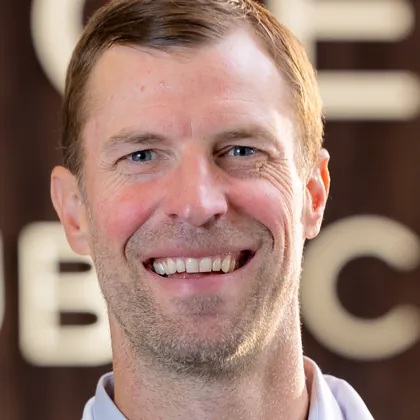
- I used it myself to recover from a bone infection that was destroying vertebrae in my spine, after being told I might never walk normally again.
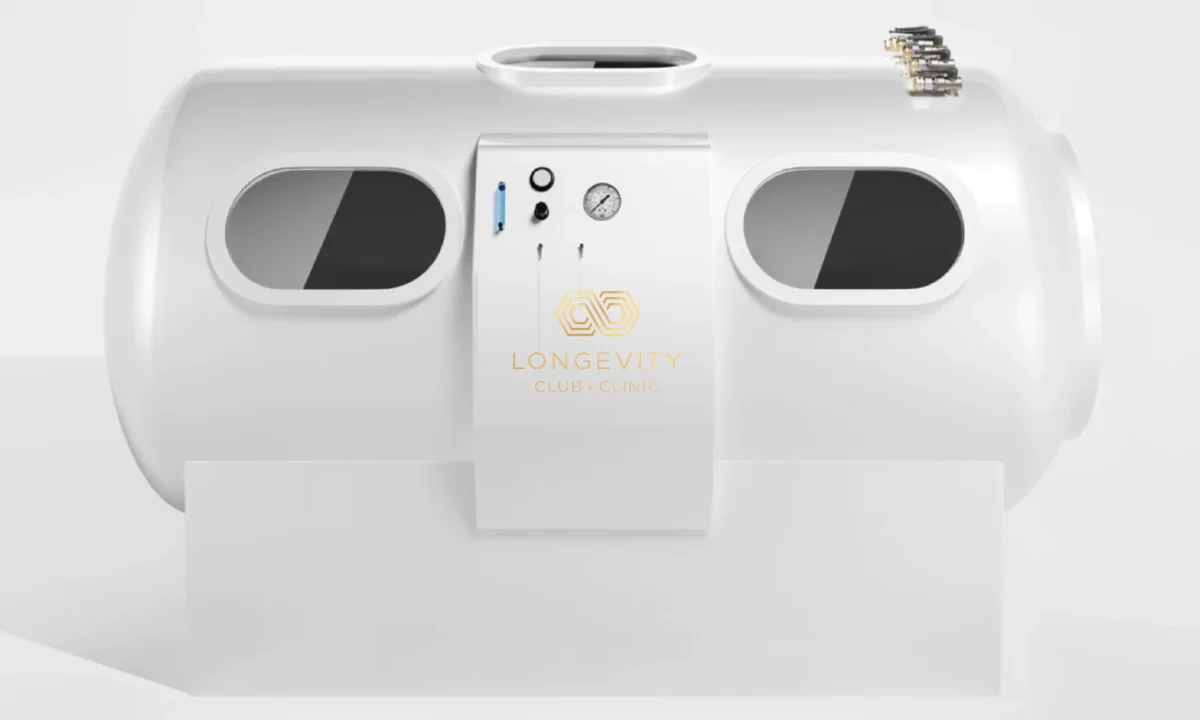
- The chamber decides everything. A hard-shell chamber such as The Alexander runs 1.3 to 3.0 ATA with 100 percent oxygen. Inflatable chambers stop near 1.3 and were not what the studies used.
- Dose decides the result. Ten sessions failed to beat placebo for long COVID in two 2025 trials. Forty sessions worked, and the benefit was still there a year later.
- We look at your blood before we book you. If your iron status is wrong, oxygen therapy waits — and sometimes what you actually need is not hyperbaric at all.
I was told I would never walk normally again
I am not writing this as a spectator. Hyperbaric oxygen is part of how I got my life back.
At forty-two I developed a bone infection in my spine. Not a strain, not a disc — an infection actively eating away at vertebrae. I had a wife and a young daughter at home, and I was told I would likely never walk normally again, that I would probably need my spine fused, and that I should prepare for chronic pain for the rest of my life.
I spent the better part of a year essentially bedridden. If you have ever been genuinely immobilised, you know the hardest part is not the pain. It is lying there listening to your family live their lives in the next room without you.
“I was a doctor who taught people how to heal, flat on my back, being told my own body could not.”
The plan I was given was three months of IV antibiotics. I understood why — bone infections are notoriously stubborn — but three months of IV antibiotics does real damage to a gut and an immune system, and I wanted to know whether there was a way to heal faster and more completely.
So I did what I have done my whole career. I went into the research.
That is where I found hyperbaric oxygen. I came across patients with my exact condition — vertebral osteomyelitis — who had added hyperbaric oxygen to their treatment and cut their antibiotic course from three months down to roughly 28 days, with more complete healing of the bone at the end of it. The mechanism made immediate sense to me: infected bone is hypoxic bone. That is precisely why the infection could establish itself there, why antibiotics struggle to penetrate, and why white blood cells cannot mount an oxidative kill. Pressurised oxygen changes all three at once, and it drives the new blood vessel growth that bone needs in order to rebuild.
Then I kept reading. And the deeper I went, the more astonished I was at what else this therapy was being used for — recovery from brain injury and stroke, clearing chronic infections, supporting people through and after cancer treatment, and a growing body of work on longevity and cellular aging. I had spent twenty years studying natural medicine and I had underestimated this one badly.
So I prayed, I believed God would heal me, and I went after the root cause with everything I had — nutrition rebuilt from the ground up, targeted botanicals, and hyperbaric oxygen at the centre of it.
The infection cleared. The bone rebuilt. I am back to a hundred percent — I lift, I hike, I keep up with my kids. I reversed what another physician told me was irreversible.
I do not tell you that to sell you anything. I tell you because when I recommend hyperbaric oxygen to a patient in Franklin, I am not recommending something I read about in a brochure. I am recommending something that gave me my life back.
How it actually works, in plain English
Hyperbaric oxygen therapy is the medical use of 100 percent oxygen delivered inside a sealed chamber pressurised above normal atmospheric pressure. That combination — pure oxygen and elevated pressure — is what separates it from an oxygen mask.
At sea level you breathe air that is about 21 percent oxygen, and almost all of that oxygen travels through your body bound to haemoglobin inside red blood cells. Haemoglobin is close to fully saturated in a healthy person, which is why breathing extra oxygen at normal pressure does relatively little: the carrier is already full.
Pressure changes the physics. Under increased atmospheric pressure, oxygen dissolves directly into the liquid portion of your blood — plasma — along with lymph and cerebrospinal fluid. Plasma reaches places red blood cells struggle to go: swollen tissue, poorly perfused bone, an area behind a blocked or damaged capillary bed. That is the mechanism behind essentially every clinical use of HBOT.
What follows downstream is well described in the literature: new capillary growth, mobilisation of stem cells from bone marrow, modulation of inflammatory signalling, enhanced white-cell killing of certain bacteria, and reduced tissue swelling through vasoconstriction that paradoxically improves oxygen delivery.
Which chamber, and why it matters
Almost nobody asks a clinic what chamber they run. It is the most important question you can ask, because the chamber determines whether you receive the therapy that was actually studied.
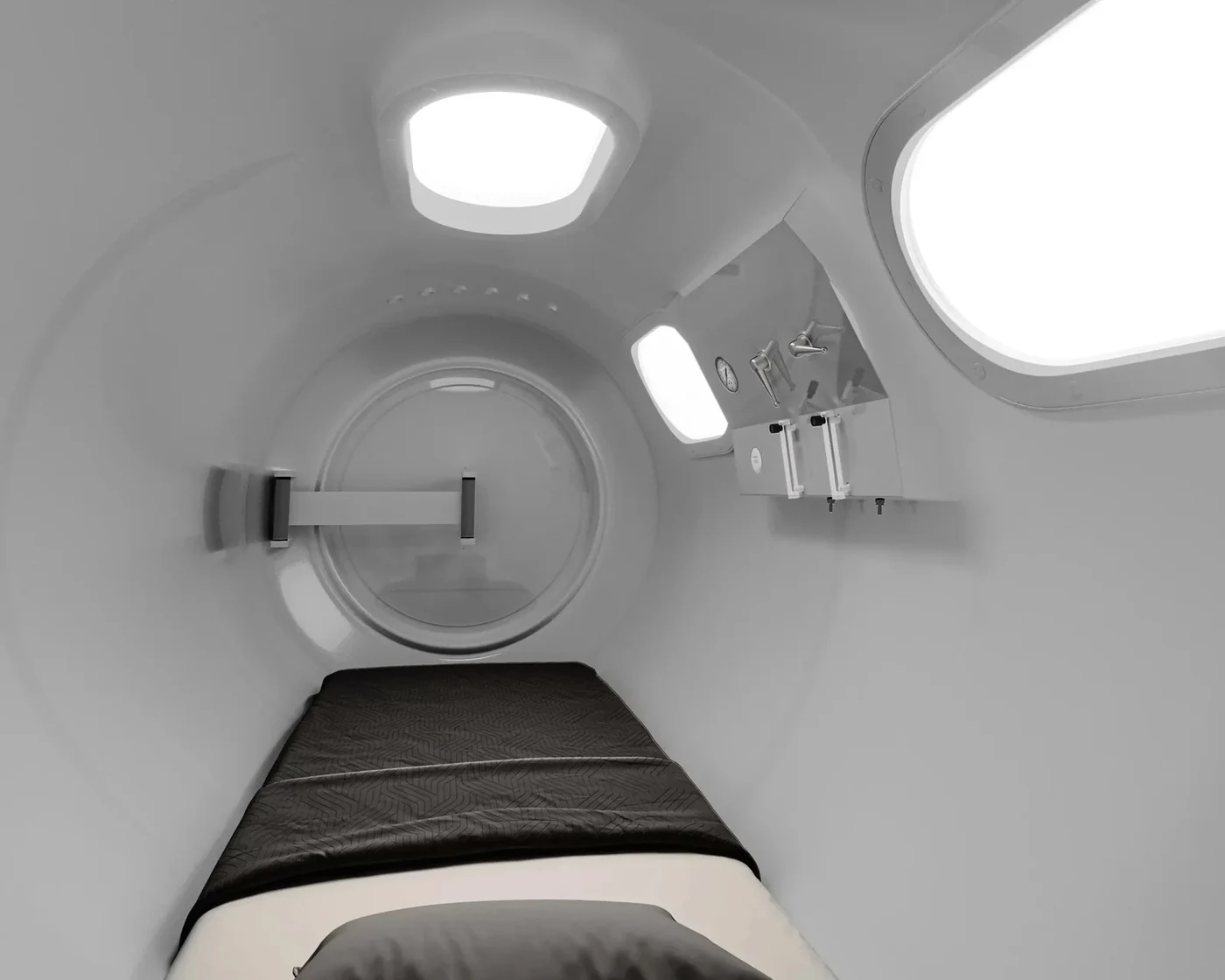
The benchmark is a chamber like The Alexander — a European-built hard-shell hyperbaric chamber and one of the finest in the world. It is a genuine clinical-grade sealed vessel, not an inflatable bag with an oxygen concentrator attached, and it reaches the pressures used in the published research.
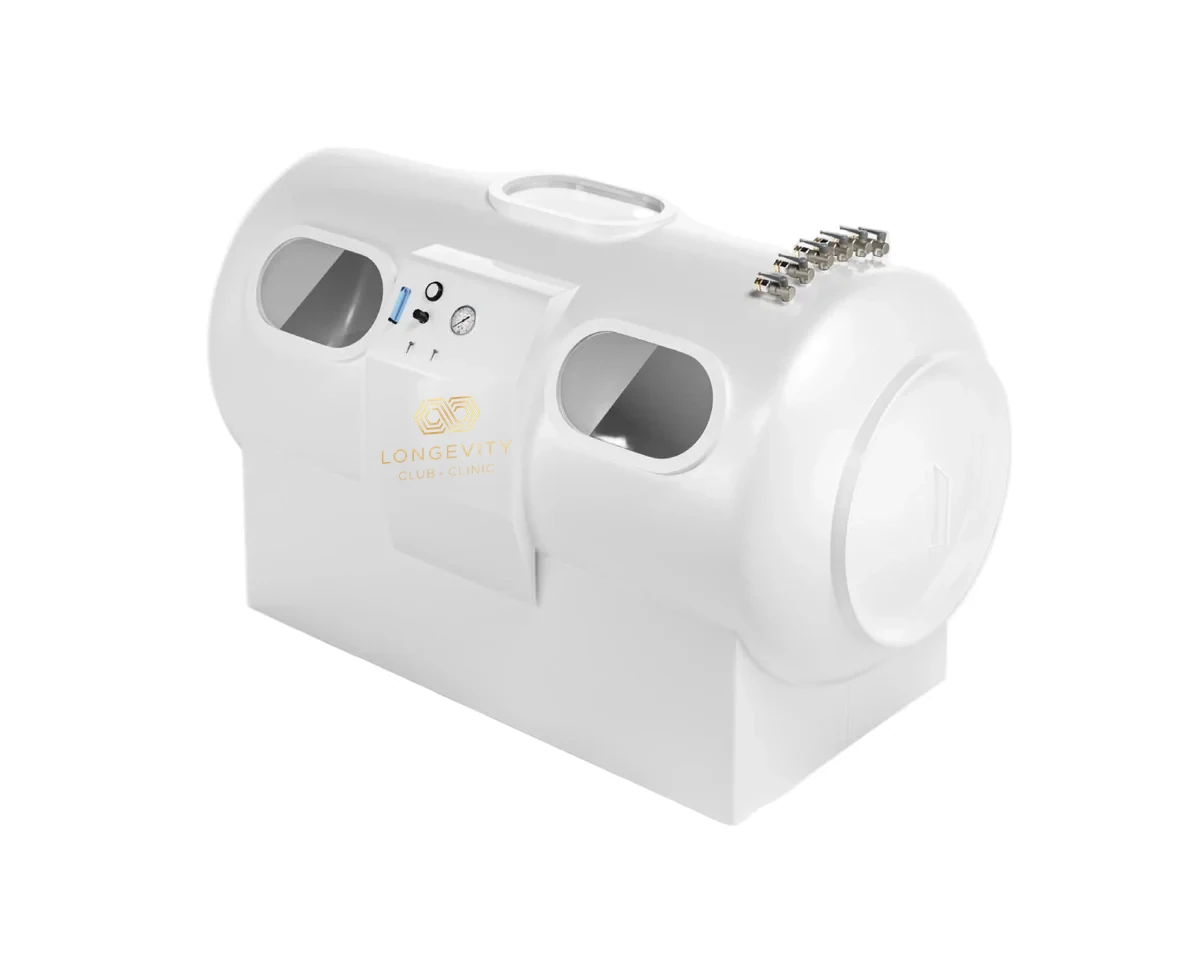
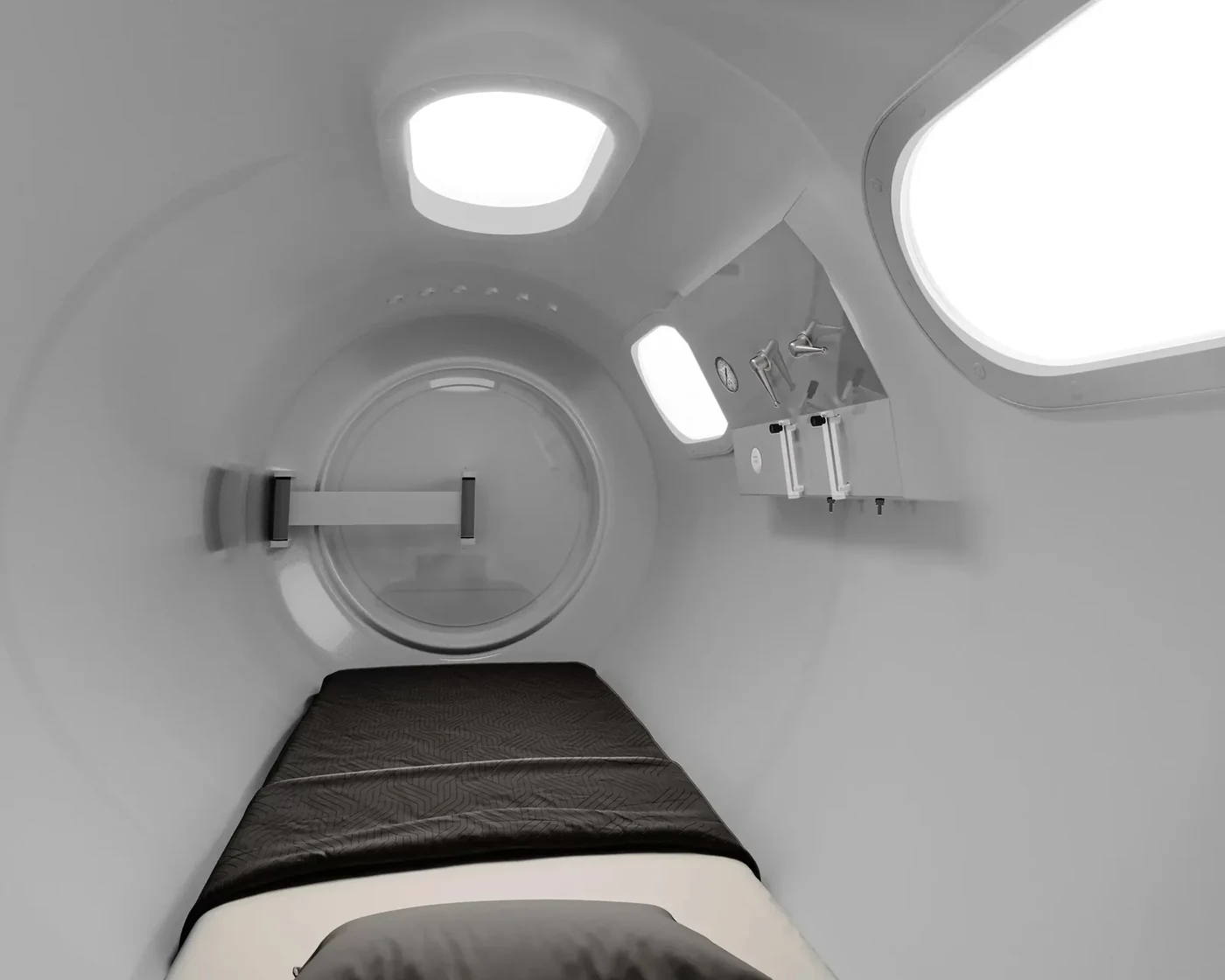
Here is why that pressure range is the whole ballgame. Soft-shell chambers — the inflatable kind you find in gyms, wellness studios and increasingly in people's garages — top out around 1.3 ATA and usually deliver concentrated air rather than pure oxygen. Nearly every clinical trial that produced a meaningful result used 1.5 to 2.5 ATA in a hard-shell chamber with 100 percent oxygen.
That difference is not a matter of degree. A soft-shell session is not a smaller dose of the same medicine; it is a different intervention with far less evidence behind it.
Exactly how much more oxygen: 1.3 ATA versus 2.4 ATA
People assume the difference between a soft chamber and a clinical one is modest. It is not. Oxygen dissolves into plasma in direct proportion to its partial pressure, so you can calculate this rather than argue about it. At roughly 0.003 mL of oxygen per decilitre of blood per mmHg, here is what each setting actually delivers.
| Setting | Lung oxygen pressure | Oxygen dissolved in plasma | vs room air |
|---|---|---|---|
| Room air, sea level | ~100 mmHg | 0.3 mL/dL | baseline |
| 1.3 ATA, compressed air (many soft chambers) | ~148 mmHg | 0.4 mL/dL | ~1.5× |
| 1.3 ATA with an oxygen concentrator | ~845 mmHg | 2.5 mL/dL | ~8× |
| 2.4 ATA, 100% oxygen (clinical) | ~1,725 mmHg | 5.2 mL/dL | ~17× |
So a clinical session at 2.4 ATA delivers roughly double the dissolved oxygen of a soft chamber running a concentrator at 1.3 ATA — and about twelve times that of a soft chamber running plain compressed air. Against normal breathing it is around seventeen times more oxygen in the fluid that actually reaches hypoxic tissue.
Hard-shell vs soft chamber
more powerful than a soft chamber.
At 2.4 ATA on 100% medical oxygen, about 5.2 mL of oxygen dissolves into every deciliter of your blood plasma. A soft chamber at 1.3 ATA on compressed air manages about 0.4 mL. That dissolved oxygen is what reaches tissue the circulation can't.
- ~2× a soft chamber running an oxygen concentrator
- ~17× normal breathing at sea level
Each bubble is the oxygen a soft chamber delivers
Top 10 hyperbaric oxygen therapy clinical benefits
Ranked from the most established to the most exciting — with the session count and the strength of evidence stated plainly for each one.
Every one of these is a real reason someone walks into our clinic in Franklin, and I will tell you which are decades-old hospital medicine and which are newer, because you cannot make a good decision about your own body on marketing.
Burns & Wound Healing
This is where hyperbaric oxygen has the longest track record, and it is the mechanism that makes everything else on this list plausible. Burned and damaged tissue swells, and swelling crushes the very capillaries that are supposed to bring in the oxygen the repair needs. Pressure breaks that cycle — oxygen dissolves straight into plasma and reaches tissue the circulation has effectively abandoned. Burn depth stops progressing. Grafts take. Wounds that had not moved in months start closing.
What the evidence showsHyperbaric oxygen is FDA-approved and standard care for diabetic foot ulcers, osteoradionecrosis, soft-tissue radiation injury, compromised grafts and flaps, and chronic refractory osteomyelitis. These indications rest on decades of clinical use.Bone Infection & Non-Healing Bone
Bone is difficult to treat because antibiotics struggle to reach it and infected bone is hypoxic, which is exactly the environment anaerobic organisms want. Raise the oxygen tension inside that bone and two things happen: your white cells get the oxygen they need to actually kill bacteria, and antibiotics penetrate better. I know this one from the inside — it is the reason I can walk today.
What the evidence showsRepeated hyperbaric exposure stimulates vascular endothelial growth factor and drives angiogenesis in hypoxic tissue. Bone infection is hypoxic by nature, which is why antibiotics penetrate poorly and white cells cannot mount an effective oxidative kill.Brain Injury & Stroke Recovery
After a concussion or a stroke, there is a band of tissue around the injury that is not dead but is not working either — starved of oxygen and effectively dormant. Several randomised trials have shown that repeated hyperbaric sessions can wake that tissue up, with cognitive gains that show on brain imaging, sometimes years after the original injury. The protocols are long, usually 40 to 60 sessions, and the people who commit to the full course are the ones who see the change.
What the evidence showsRandomised trials of 40-session protocols in post-concussion syndrome and fibromyalgia have reported improvements in cognitive testing and pain scores. Shorter courses have not reproduced these results, which is consistent with angiogenesis requiring weeks to develop.Fibromyalgia & Chronic Pain
Fibromyalgia is one of the most dismissed diagnoses in medicine, and one of the most real. Brain imaging shows altered activity in pain-processing regions, and randomised work from Israeli centres has shown that 40 sessions of hyperbaric oxygen can shift both the symptoms and those imaging findings. If you have been told your pain is in your head, this is the therapy that takes seriously the fact that your head is part of your body.
What the evidence showsHyperbaric oxygen mobilises stem and progenitor cells from bone marrow into circulation, with documented increases in circulating CD34+ cells following repeated sessions.Athletic Performance & Recovery
Recovery is where training actually happens, and oxygen is the rate-limiting step in recovery. Hyperbaric sessions after hard training or competition reduce inflammatory load, speed soft-tissue repair and support the mitochondrial capacity that endurance depends on. Elite teams have used this quietly for years. The human performance data is still thinner than the mechanism deserves, but for anyone training seriously it is one of the highest-value additions available.
What the evidence showsPressure reduces tissue oedema through vasoconstriction while simultaneously raising oxygen delivery through dissolved plasma oxygen — breaking the swelling-hypoxia cycle that perpetuates chronic inflammation.Chronic Infections & Lyme
Many of the organisms that drive chronic infection are anaerobic or micro-aerophilic — they are built for low-oxygen environments and they hide in tissue where circulation is poor. Flooding that tissue with oxygen is directly hostile to them, and it supports immune function at the same time. Where it is used well, hyperbaric oxygen sits alongside ozone and a proper drainage protocol, never on its own, and never before the terrain is ready for it.
What the evidence showsAnaerobic organisms cannot tolerate elevated oxygen tension, and neutrophils require oxygen to generate the reactive species used for bacterial killing. Both mechanisms are why hyperbaric oxygen is established in refractory osteomyelitis.Long COVID & Post-Viral Illness
The brain fog, the crushing fatigue, the sense that your body forgot how to make energy — there is now real randomised evidence that hyperbaric oxygen helps this, with one important condition attached. See the section below, because the dose is the entire story, and most clinics are selling a course that no study supports.
What the evidence showsTwo placebo-controlled trials in 2025 — HOT-LoCO at Karolinska and a separate European trial — tested 10-session courses in long COVID and found no significant difference from sham, while earlier 40-session work reported benefit. Dose appears to be decisive.Cancer Recovery & Radiation Injury
Hyperbaric oxygen is not a cancer treatment. What it is exceptionally good at is repairing what treatment leaves behind. Radiation damages the blood supply in the tissue it passes through, sometimes years later, and hyperbaric oxygen rebuilds that blood supply — it is standard care for osteoradionecrosis and soft-tissue radiation injury. There is also a reasonable case that driving oxygen deep into tissue and supporting mitochondrial function may play a preventive role, since low-oxygen, metabolically stressed tissue is the environment disease tends to favour. For anyone rebuilding after treatment, alongside their oncology team, it is one of the most useful tools we have.
What the evidence showsAt 2.4 ATA on 100 percent oxygen, dissolved plasma oxygen reaches roughly 5.2 mL/dL against 0.3 mL/dL breathing room air — approximately seventeen times more oxygen in the fluid that reaches hypoxic tissue.Surgery Recovery
Every surgical site is a wound with a compromised blood supply, and every hour it spends under-oxygenated is an hour it is not healing. Used before and after a procedure, hyperbaric oxygen reduces swelling, supports the tissue at the margins where healing is most precarious, and lowers infection risk in compromised grafts and flaps. If you have a planned surgery, this is worth arranging in advance rather than afterwards.
What the evidence showsPerioperative hyperbaric oxygen has been studied for improving graft and flap survival and reducing surgical site complications, with the strongest data in compromised tissue.Longevity & Healthy Aging
This is the newest use and the one I find most interesting. A trial at Tel Aviv University measured telomere lengthening of more than 20 percent alongside a meaningful drop in senescent cells — the worn-out cells that sit in tissue and drive inflammation. It is one small study without a control group. But it is a real, peer-reviewed signal that pressure and oxygen do something at the cellular level that very little else does, and in practice we build longevity protocols around 30 sessions.
What the evidence showsA trial at Tel Aviv University in adults over 64 measured telomere lengthening exceeding 20 percent alongside reduced senescent cell burden following a course of daily hyperbaric sessions.Hyperbaric oxygen is powerful, and it is not magic. It works best alongside the rest of your care, not instead of it — and it works best when someone has actually looked at why you are unwell. If a clinic promises you the world without asking a single question about your history, that is your answer.
Long COVID: why the answer depends on the dose
This is the clearest example on this page of why session count matters, and it is the thing I would most want a prospective patient to understand before spending money anywhere.
A randomised controlled trial from the Sagol Center for Hyperbaric Medicine at Shamir Medical Center in Israel treated post-COVID patients with 40 daily sessions and reported significant improvement across cognitive, psychiatric, fatigue, sleep and pain measures. A longitudinal follow-up published in Scientific Reports in 2024 found that most of those gains were still present roughly a year after the final session.
Then two placebo-controlled trials in 2025 tested 10 sessions instead — HOT-LoCO at Karolinska and a separate European trial. Neither beat placebo.
Read together, those results are not contradictory so much as instructive. A short course of hyperbaric oxygen for long COVID appears to perform about as well as a convincing placebo. The protocol that produced durable benefit was four times longer.
If a clinic offers you a package of five or ten sessions for post-viral fatigue or brain fog, ask which study that package is based on. What I tell patients is usually none. A meaningful course is 30 or more sessions, and the cost and time commitment of that should be discussed with you before you start, not discovered at session eight.
The telomere study, read carefully
In 2020 a team at Tel Aviv University and Shamir Medical Center published a trial in the journal Aging that has been quoted in nearly every longevity clinic's marketing since, usually without its limitations.
Here is what it found. Thirty-five healthy adults aged 64 and over received 60 daily hyperbaric sessions over 90 days. Telomere length in T helper, cytotoxic T, natural killer and B cells increased by more than 20 percent, with B cells changing most — up to roughly 38 percent. Senescent cell populations fell by between 11 and 37 percent depending on cell type. For a non-pharmacological intervention, those are unusual numbers.
And here is what it did not have: a control group, a large sample, or outcomes beyond isolated blood cells. Telomere length in peripheral immune cells is a biomarker, not a lifespan. It is a genuinely interesting result that justifies further study — which is different from a proven anti-aging treatment, and I would rather you hear that from me than discover it later.
What people commonly experience with HBOT
When patients receive the proper guidance, here is what people commonly experience with it.
- Sessions 1–3 — clarity and sleep. The brain consumes roughly twenty percent of your oxygen while accounting for two percent of your body weight, so it is usually the first tissue to register a change in supply. Patients describe the mental fog lifting before anything else shifts, and many sleep unusually deeply the first few nights as the nervous system settles.
- Weeks 2–4 — energy that holds. Dissolved plasma oxygen reaches mitochondria that circulation had been under-serving, which raises ATP output. The practical version is energy that lasts through the afternoon rather than requiring caffeine to get there.
- Weeks 4–8 — tissue and pain. This is when the structural work becomes noticeable. Repeated pressure cycles stimulate the growth-factor signalling that builds new capillary networks, so tissue that had been starved begins to be genuinely re-supplied rather than temporarily flooded. Joint and soft-tissue pain typically eases here.
- Across a full course — measurable change. Falling hs-CRP. Improved wound and surgical-site healing. In post-concussion cases, cognitive testing that moves. The angiogenesis that makes hyperbaric oxygen durable takes weeks to build, which is precisely why the protocols that produced results in the literature ran to forty sessions and not four.
If you are carrying something that has not moved in years, hyperbaric oxygen may be part of the answer. Schedule a consultation and let my team find the root of what is actually going on, then tell you honestly whether the chamber is the right next step for you. World-class care from a team who is invested in your outcome.
What I want you to take from that is the shape of it: the early gains are real but they are supply-side, and the lasting gains are structural. Stop at session eight and you get the first kind. Finish the course and you get both.
What a hyperbaric oxygen session feels like
Most people are surprised by how unremarkable it is. You lie down, the pressure changes, and an hour or two passes.
- You change and settle in. Cotton clothing, no petroleum-based products, no lighters or electronics with lithium batteries in the chamber. This is a pure-oxygen environment and fire safety is taken seriously.
- Pressurisation takes about ten minutes. Your ears will feel exactly like a plane descending. You clear them by swallowing, yawning or a gentle Valsalva, and the operator slows the descent if you need more time.
- You settle at treatment pressure for 60 to 120 minutes. Most people read, listen to something, nap or simply lie there. You stay in two-way communication with the operator throughout.
- Depressurisation is gradual. Ears may pop again. Some people feel pleasantly tired afterwards and others feel noticeably clear-headed; both are normal.
Is hyperbaric oxygen therapy safe? Side effects and who should avoid it
HBOT has a good safety record in supervised settings, and a specific, well-documented set of risks that any clinic should walk you through before your first session.
Common and manageable: middle-ear barotrauma is the most frequent issue and is usually prevented by proper equalisation and a slower pressurisation rate. Sinus discomfort is common when congested. Temporary short-sightedness can develop across a long course and typically resolves over weeks to months after finishing.
Uncommon: confinement anxiety, which is worth raising in advance because it is easily accommodated. Oxygen-toxicity seizures are rare at standard treatment pressures and managed by protocol. Cataract progression has been reported with very long courses, and one long COVID registry noted a case after a shorter course, so extended protocols warrant monitoring.
Absolute contraindication: untreated pneumothorax.
Requires review first: certain chemotherapy agents including bleomycin, uncontrolled seizure disorders, severe COPD with carbon dioxide retention, recent ear or chest surgery, uncontrolled fever, and pregnancy — where we exclude elective hyperbaric use outright, including through the preconception window.
How many HBOT sessions do you need, and what does it cost?
Session count follows the indication, not the package a clinic wants to sell. This is the number to settle before you look at price.
| Reason for treatment | Typical course in the literature |
|---|---|
| Burns and non-healing wounds | 20–40 sessions |
| Bone infection (osteomyelitis) | 20–40 sessions, often alongside a shortened antibiotic course |
| Brain injury, concussion or stroke recovery | 40–60 sessions |
| Fibromyalgia and chronic pain | 40 sessions in the trials that showed benefit |
| Chronic infection and Lyme | 20–40 sessions, sequenced after drainage |
| Long COVID and post-viral fatigue | 40 sessions — ten did not beat placebo |
| Radiation injury and cancer recovery | 30–40 sessions |
| Surgery recovery | 5–20 sessions, ideally starting before the procedure |
| Longevity and healthy aging | 30 sessions over about 90 days |
| Athletic recovery and performance | Ongoing, typically 1–3 sessions weekly |
Across the Nashville, Franklin and Brentwood market, individual sessions generally run $200 to $350 depending on chamber type, pressure and whether there is clinical oversight, with packages and memberships bringing the effective rate down considerably. HSA and FSA funds can usually be applied.
Getting hyperbaric oxygen therapy near Nashville
Middle Tennessee has several options, and they are genuinely different from one another. Which one fits depends on why you are going.
- Hospital wound-care programmes across the Nashville area provide HBOT for accepted wound and radiation indications, usually by referral and typically billed to insurance. If you have a non-healing diabetic ulcer or osteoradionecrosis, this is the appropriate route.
- Wellness studios and gyms generally operate soft-shell chambers near 1.3 ATA. Fine for a relaxing recovery session; not the pressure used in the clinical literature.
- Physician-led functional and longevity clinics run hard-shell chambers at clinical pressures with oversight and a treatment plan behind them.
We are at 329 S. Royal Oaks Blvd, Franklin, Tennessee 37064 — about twenty minutes south of downtown Nashville, minutes from Cool Springs and Brentwood, and easy to reach from Spring Hill, Murfreesboro and across Williamson County. Nashville International is roughly thirty minutes away, and we schedule out-of-state patients in concentrated blocks so a course of therapy can be completed in fewer trips.
Common questions about HBOT in Nashville and Franklin
Where can I get hyperbaric oxygen therapy near Nashville?
At The Longevity Club + Clinic in Franklin. We are at 329 S. Royal Oaks Blvd in Franklin, Tennessee, about twenty minutes south of downtown Nashville and convenient to Brentwood, Cool Springs, Spring Hill and the wider Williamson County area, and our hard-shell chamber runs at clinical pressures of up to 2.4 ATA with 100 percent medical-grade oxygen, the range used in the published clinical research. Hospital wound-care programmes in Nashville also provide HBOT for FDA-cleared wound indications, and several wellness studios offer lower-pressure soft-shell chambers.
What is the difference between a hard-shell and a soft-shell hyperbaric chamber?
Pressure, and it is the single most important thing to ask about. Soft-shell or inflatable chambers are limited to roughly 1.3 ATA and usually deliver concentrated rather than 100 percent oxygen. Hard-shell chambers reach 2.0 to 3.0 ATA with 100 percent oxygen. Almost every clinical trial showing meaningful benefit used 1.5 to 2.5 ATA in a hard chamber, so a soft-shell session is not a lower dose of the same treatment so much as a different intervention with far less evidence behind it.
How many hyperbaric oxygen sessions will I need?
It depends entirely on what you are treating, and the number matters more than most clinics admit. Acute indications such as carbon monoxide poisoning may need only one to three sessions. Wound and radiation-injury protocols typically run 20 to 40. The trials that showed benefit in post-COVID cognitive symptoms and fibromyalgia used around 40 daily sessions, and we build longevity protocols around 30. Two 2025 placebo-controlled trials found that 10 sessions did not outperform sham for long COVID, so a short course is unlikely to reproduce the published results.
Is hyperbaric oxygen therapy safe?
For most people it is very safe, with a well-characterised set of risks. The most common side effect is middle-ear barotrauma, which is manageable with proper equalisation technique and slower pressurisation. Temporary short-sightedness can occur over a long course and usually resolves within weeks to months. Oxygen-toxicity seizures are rare at standard pressures. Untreated pneumothorax is an absolute contraindication, and certain chemotherapy agents, uncontrolled seizure disorders, severe COPD with carbon dioxide retention and recent ear surgery all require review before treatment.
Does insurance cover hyperbaric oxygen therapy?
Coverage varies considerably by plan and by indication, and most longevity and wellness use is paid out of pocket. HSA and FSA funds can usually be applied, and we give you the full course cost in writing before anything is scheduled so there are no surprises.
Can hyperbaric oxygen therapy help with long COVID?
What I tell patients is that it depends on the dose, and the evidence is genuinely split. A randomised trial from Shamir Medical Center using 40 daily sessions reported significant improvement in cognitive, fatigue, sleep and pain symptoms, with benefits still present at one-year follow-up. However, the HOT-LoCO trial at Karolinska and a separate European trial, both using only 10 sessions and both placebo-controlled, found no advantage over sham. Dose appears to be the deciding variable.
Does hyperbaric oxygen therapy reverse aging?
One small trial produced striking results, and it should be read carefully. Researchers at Tel Aviv University and Shamir Medical Center gave 35 healthy adults aged 64 and over a course of daily hyperbaric sessions across 90 days. Telomere length in several immune cell populations increased by more than 20 percent, and senescent cell counts fell by 11 to 37 percent depending on cell type. That is a real and peer-reviewed finding, but it is 35 people with no control group, measured in isolated blood cells rather than whole-body outcomes.
What does hyperbaric oxygen therapy cost near Nashville?
Single sessions across the Nashville, Franklin and Brentwood area generally run $200 to $350 depending on pressure, chamber type and whether a physician is on site, with package and membership pricing bringing the per-session cost down substantially. Because the protocols that show benefit involve 20 to 60 sessions, the total course cost matters far more than the headline session price. We quote the whole course before anything is scheduled.
- Hachmo Y, Hadanny A, Abu Hamed R, et al. Hyperbaric oxygen therapy increases telomere length and decreases immunosenescence in isolated blood cells: a prospective trial. Aging. 2020;12(22):22445–22456. PMC7746357
- Hadanny A, Zilberman-Itskovich S, Catalogna M, et al. Long term outcomes of hyperbaric oxygen therapy in post covid condition: longitudinal follow-up of a randomized controlled trial. Scientific Reports. 2024;14:3604. doi:10.1038/s41598-024-53091-3
- Kjellberg A, Hassler A, Boström E, et al. Ten sessions of hyperbaric oxygen versus sham treatment in patients with long covid (HOT-LoCO): a randomised, placebo-controlled, double-blind, phase II trial. BMJ Open. 2025;15(4):e094386. PMC11997836
- Undersea and Hyperbaric Medical Society. UHMS Hyperbaric Oxygen Therapy Indications, 15th edition. Best Publishing, 2023.
- U.S. Food and Drug Administration. Consumer update on hyperbaric oxygen therapy and unapproved claims, 2013.
- Effect of normobaric and hyperbaric hyperoxia on symptoms and cognitive capacities in long COVID patients: a randomised placebo-controlled, double-blind trial. Diving and Hyperbaric Medicine Journal. 2025. PMC12267068
This article is educational and reflects the published literature as of August 2026. It is not a diagnosis or a treatment recommendation for any individual. Hyperbaric oxygen therapy should be undertaken with clinical supervision, and any decision about your care belongs in a conversation with a licensed practitioner who has seen your history and your labs.